

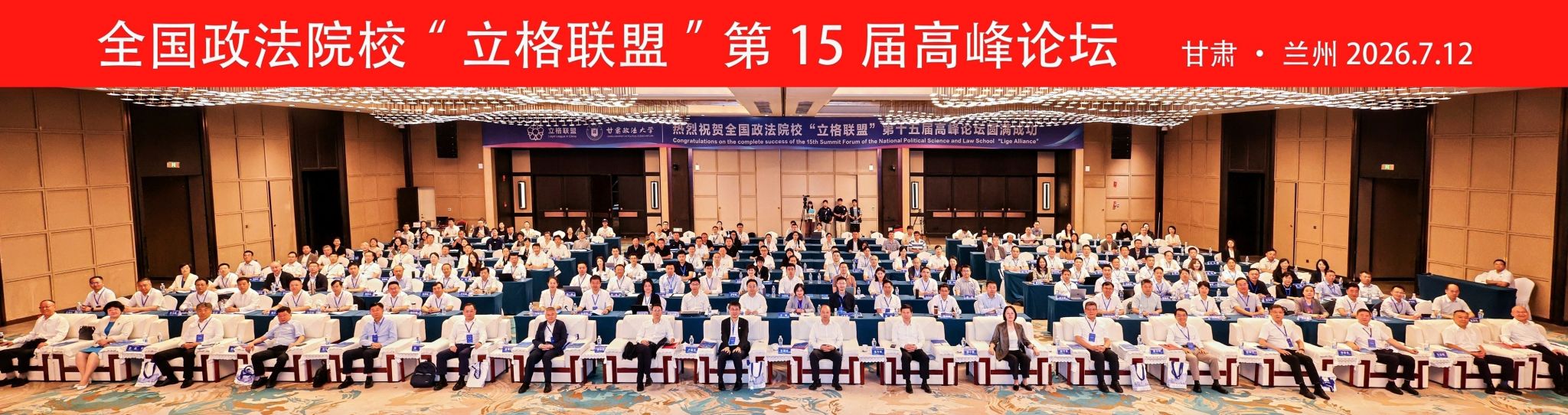
On July 12, the 15th Summit Forum of the Legal Education Alliance was held in Lanzhou,hosted by Gansu University of Political Science and Law. Themed “Innovating Models for Legal Talent Cultivation under the Integrated Development of Education,Science and Technology, and Talent,” the forum brought together university leaders, department heads, and experts and scholars from the alliance’s 10 member universities. Zhu Fangwei, President and Deputy Secretary of the CPC Committee of Zhongnan University of Economics and Law (ZUEL), and Chen Baifeng, Vice President and Member of the CPC Standing Committee of ZUEL, attended the event. Heads of the university’s Party Committee Office, President’s Office, Graduate School, Office of Development Planning and Discipline Construction, Undergraduate School, Journal Management Center, Law School, and School of International Law were also present.
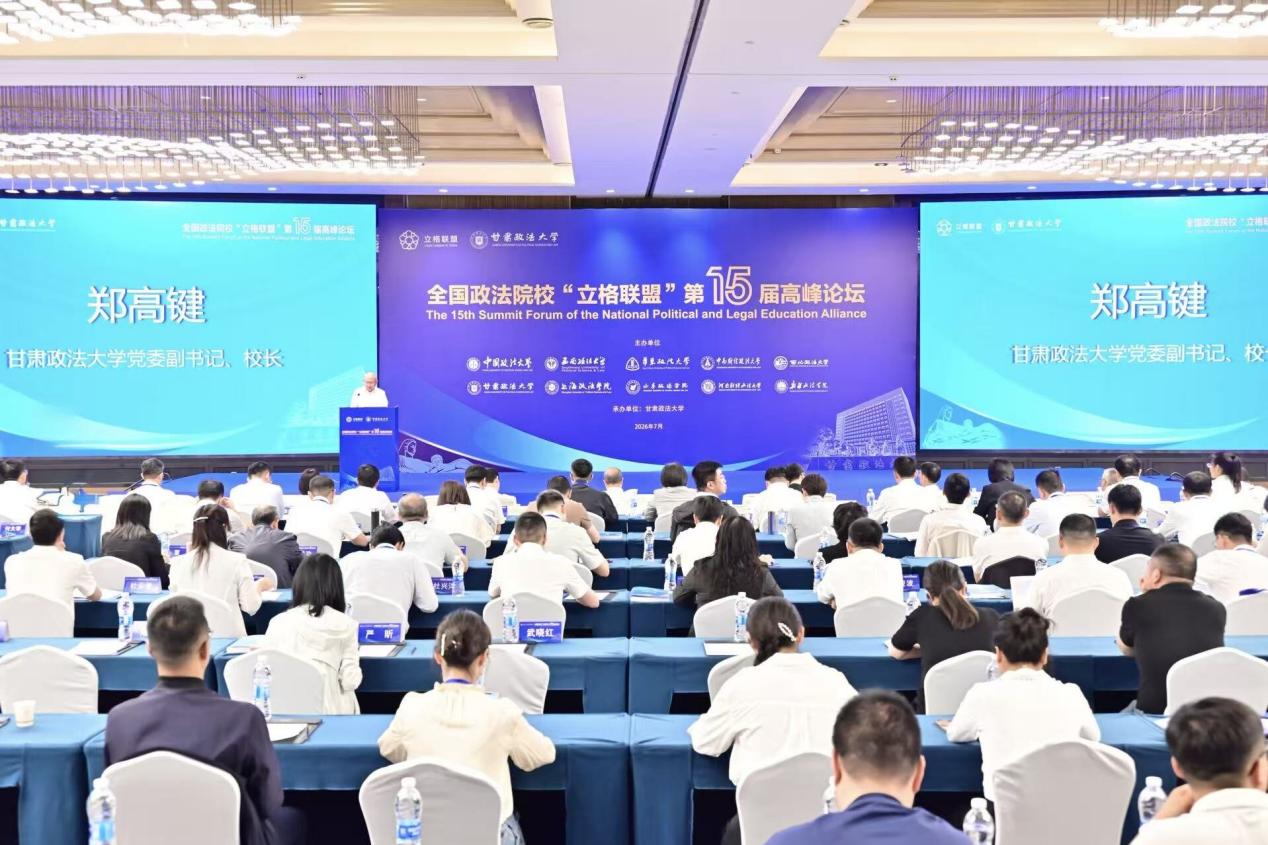
At the opening ceremony, Jiao Shengrong, Secretary of the Party Committee of Gansu University of Political Science and Law; Lu Chunlong, President and Deputy Secretary of the Party Committee of China University of Political Science and Law; Xu Yongsheng, Executive Deputy Secretary of the Gansu Provincial Committee of Political and Legal Affairs; and Zhang Guozhen, Secretary of the Party Leadership Group and Director of the Gansu Provincial Department of Education, delivered remarks.
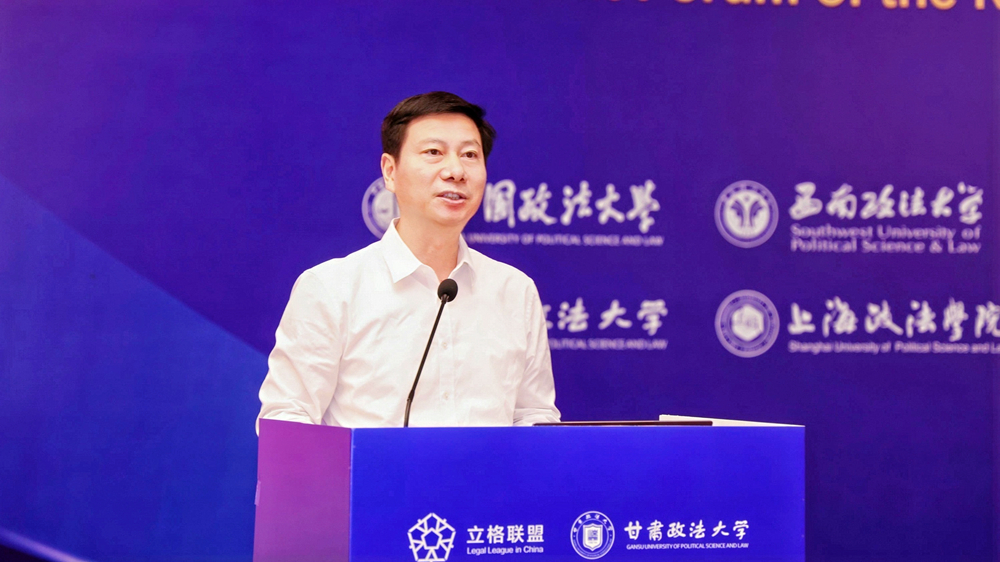
Zhu delivered a keynote speech entitled "Building a New Paradigm for Discipline Development Based on Research Fields." He provided an in-depth analysis of the four major practical challenges currently confronting legal talent cultivation: misalignment between legal education objectives and the evolving needs of society and rule-of-law development, disconnection between academic development, talent training systems, and legal practice,homogenization of legal education models and talent cultivation approaches across universities and isolation of legal studies from interdisciplinary collaboration, professional practice, and global perspectives;and systematically outlined ZUEL’s practical exploration in restructuring its discipline development and talent cultivation systems with research fields as the fundamental units.
He noted that ZUEL has established a four-in-one mechanism for research field development, including identifying needs arising from social and practical demands, integrating and refining development directions with tiered planning, implementing closed-loop management, and continuous refinement and enhancement of discipline development. Through this mechanism, the university aims to break down traditional disciplinary barriers. A shift is taking place from discipline-centered development toward serving national strategic needs, and from asking “Which discipline do we political science and law universities belong to?” to asking “Which problems in a specific field can we solve?”
ZUEL will continue to strengthen connections with practical sectors, improve resource allocation and evaluation systems oriented toward the actual contributions of different fields, promote interdisciplinary integration, and further leverage artificial intelligence to empower the development of law. Zhu emphasized that the core competitiveness of political science and law universities lies in being closely aligned with the needs of legal practice and developing irreplaceable advantages in specific fields. He called on fellow member universities of the alliance to work together to create a brighter future for legal education in China.
The conference simultaneously set up four sub-forums. Experts and scholars from various universities and colleges went to different venues and conducted in-depth exchanges and discussions on four major themes: “Collaborative Training Mechanisms for Legal Talent under Government-Industry-University-Research-Application Integration”, “Reconstruction of the Legal Curriculum System under the Integrated Development of Education, Science and Technology, and Talent”, “Digital Technology Empowerment and the Upgrading of Legal Talent’s Comprehensive Competencies” and “Improvement of Legal Talent Training Standards and Quality Evaluation Systems under the Integrated Development of Education, Science and Technology, and Talent”.
In the afternoon, the forum held its closing ceremony. Moderators of each sub-forum reported in turn on the core viewpoints and exchange outcomes of their respective sessions. At the emblem handover ceremony during the closing ceremony, Gansu University of Political Science and Law and China University of Political Science and Law, the host of the 16th Summit Forum, completed the handover of the forum emblem.
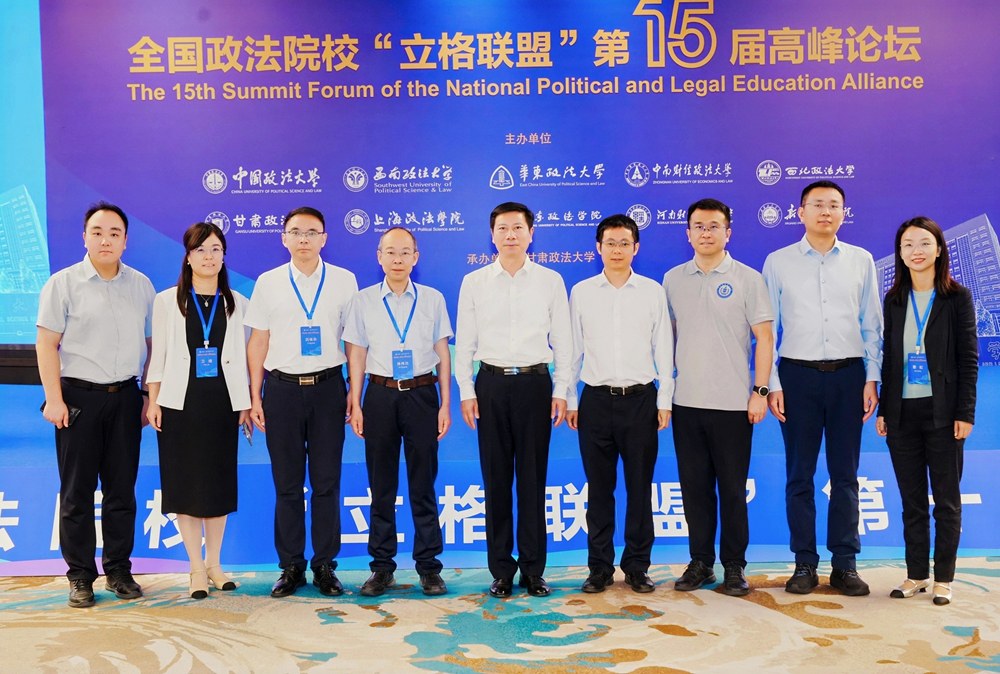
The “Legal Education Alliance”was officially established in 2010.The Chinese name for the alliance, “Lige”, is a transliteration of the English word “legal”.It currently has 10 member universities, including China University of Political Science and Law, Southwest University of Political Science and Law, East China University of Political Science and Law, Zhongnan University of Economics and Law, Northwest University of Political Science and Law, Gansu University of Political Science and Law, Shanghai University of Political Science and Law, Shandong University of Political Science and Law, Henan University of Economics and Law, and Xinjiang University of Political Science and Law. It has grown into a nationally influential legal summit forum and a major event for legal education exchange.
(END)
Reported by:Tian Ke